
Question 1Coordinate geometry
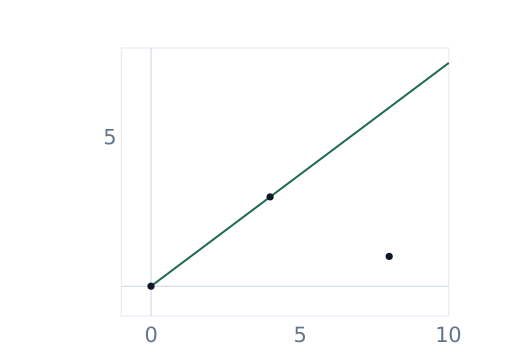
The point P lies on the ray that starts at the origin and passes through (4, 3). The distance from P to (8, 1) is 5. What is the greater possible distance from P to the origin?
These are SummitPapers original questions, not official past paper questions. Official TMUA questions sorted by topic are on TMUA past papers by topic.
Covers: circles, tangents and chords, lines, midpoints and perpendicular distance, parabolas and the distance from a point to a curve, reflections and loci, triangles in the coordinate plane.
Question 1Coordinate geometry
Coordinate geometry here means lines, midpoints and perpendicular distance, circles with tangents and chords, and parabolas, including the distance from a point to a curve.
This is Section 1, on both papers in this set. Each question has five options. A paper is 20 questions in 75 minutes, with no calculator.
This note is written for SummitPapers. The official list of what can be examined is the specification, together with the Notes on Mathematics and, for Paper 2, the Notes on Logic and Proof.
Two points fix the gradient, and the gradient of a perpendicular is the negative reciprocal, when the gradient is not zero. The midpoint averages the coordinates.
A tangent is perpendicular to the radius at the point of contact. A chord’s perpendicular from the centre bisects the chord. Expanding (x − a)² + (y − b)² = r² and completing the square are the same circle.
The negative reciprocal of 2 is −1/2, not 1/2 and not −2.
In x² + y² + dx + ey + f = 0 the radius is not √f. Completing the square moves f and adds (d/2)² and (e/2)².
This question is also in the list below, with the solution folded. It is opened here so the method is on the page before the other questions.
Answer: E. 10
Worked solution. Write P = (4t, 3t) with t > 0. Then (4t − 8)2 + (3t − 1)2 = 25 expands to 25t2 − 70t + 40 = 0, or 5t2 − 14t + 8 = 0, so (5t − 4)(t − 2) = 0. Thus t = 2 or t = 4/5. The distances from the origin are 5t, namely 10 and 4, and the greater is 10.
Why the other options look right. A is the distance for the nearer point, where t = 4/5. B reports the given distance 5 from (8, 1) instead of the distance from P to the origin. C finds the further point (8, 6) but reports its y-coordinate 6 instead of its distance from the origin. D finds the further point (8, 6) but reports its x-coordinate 8 instead of its distance from the origin.
Paper 1 is Applications of Mathematical Knowledge. Calculators are not allowed.
Free · worked solution included
Answer: E. 10
Worked solution. Write P = (4t, 3t) with t > 0. Then (4t − 8)2 + (3t − 1)2 = 25 expands to 25t2 − 70t + 40 = 0, or 5t2 − 14t + 8 = 0, so (5t − 4)(t − 2) = 0. Thus t = 2 or t = 4/5. The distances from the origin are 5t, namely 10 and 4, and the greater is 10.
Why the other options look right. A is the distance for the nearer point, where t = 4/5. B reports the given distance 5 from (8, 1) instead of the distance from P to the origin. C finds the further point (8, 6) but reports its y-coordinate 6 instead of its distance from the origin. D finds the further point (8, 6) but reports its x-coordinate 8 instead of its distance from the origin.
Free · worked solution included
Answer: B. 3√2
Worked solution. The change in x is 6 and the change in y is −6, so the diameter has length √(62 + 62) = √72 = 6√2. The radius is half of that length, which is 3√2.
Why the other options look right. A takes half of the horizontal change 6 and ignores the vertical change. C adds the changes instead of using Pythagoras, taking the diameter as 6 + 6 = 12 and so the radius as 6. D stops at the length of the diameter, 6√2, and forgets to halve it to get the radius. E finds r² = 3² + 3² = 18 and then halves it instead of taking the square root, giving 9.
Free · worked solution included
Answer: C. 22
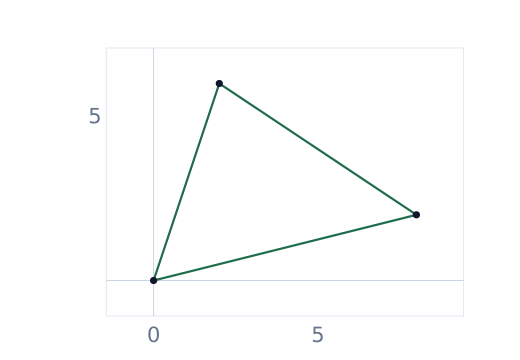
Worked solution. One vertex is the origin, so the area is half the absolute value of the cross product of the other two position vectors: (1/2)|8 × 6 − 2 × 2| = (1/2)|48 − 4| = (1/2) × 44 = 22.
Why the other options look right. A multiplies each point's own coordinates, giving (1/2)|8 × 2 − 2 × 6| = 2. B is (1/2) × 8 × 6 = 24, with the subtracted term 2 × 2 omitted. D drops the factor 1/2 and reports 44. E takes the area of the enclosing rectangle, 8 × 6 = 48, instead of the triangle.
Free · worked solution included
Answer: B. 3/2
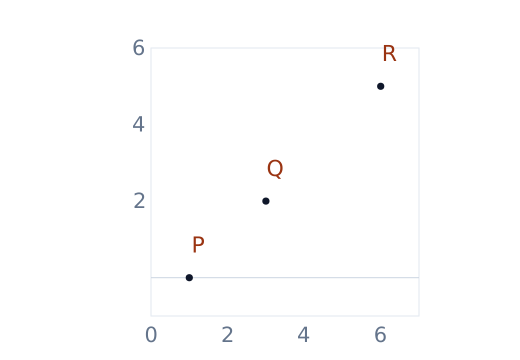
Worked solution. The vector PQ is (2, 2) and the vector QR is (3, 3). Then (3, 3) = (3/2) × (2, 2), and both components give the same scale factor. Therefore k = 3/2.
Why the other options look right. A is the slope of PQ, which is 2/2 = 1, not the scale factor. C is the x-component of QR, with no division by the x-component of PQ. D uses the whole segment from P to R: PR = (5, 5) = (5/2) × PQ. E is the reciprocal, from writing PQ = (2/3) × QR.
Free · worked solution included
Answer: E. √10
Worked solution. Factor 3 from each bracket: (3(x − 2))2 + (3(y + 1))2 = 90, so 9((x − 2)2 + (y + 1)2) = 90. Dividing by 9 gives (x − 2)2 + (y + 1)2 = 10. The radius is √10.
Why the other options look right. A takes the square root of 90 and does not divide the equation by 9, giving 3√10. B reports the squared radius 10. C divides 90 by 3 rather than by 9, leaving radius √30. D mistakes the factor 3 taken out of each bracket for the radius.
Free · worked solution included
Answer: C. π/4
Worked solution. The gradient of a line is the tangent of the angle it makes with the positive x-axis. For gradients m1 = 2 and m2 = −3, the tangent of the angle θ between the lines satisfies tan θ = |(m1 − m2)/(1 + m1 m2)| = |(2 − (−3))/(1 + 2 × (−3))| = |5/(1 − 6)| = 1. The acute angle with tangent 1 is π/4.
Why the other options look right. A uses only |m1 − m2| = 5 and drops the denominator, giving arctan(5). B treats the lines as perpendicular because the product of the gradients is negative, although perpendicular lines need m1 m2 = −1, not −6. D puts a minus into the denominator, using 1 − m1 m2 = 7, so tan θ = 5/7. E drops the absolute value: (m1 − m2)/(1 + m1 m2) = 5/(−5) = −1 gives the obtuse angle 3π/4, which is not the acute angle asked for.
Free · worked solution included
Answer: C. √13
Worked solution. Complete the square: (x + 2)2 + (y − 3)2 = k + 13. The point (1, 5) gives 32 + 22 = k + 13, so 13 = k + 13 and k = 0. The squared radius is 13, and the radius is √13.
Why the other options look right. A substitutes (1, 5) into x2 + y2 only, getting 1 + 25 = 26, and takes 26 as the squared radius, giving √26. B reports the squared radius 13 instead of its square root. D adds the horizontal and vertical distances from the centre (−2, 3) to (1, 5), 3 + 2 = 5, instead of combining them with Pythagoras. E takes the centre as (2, 3), with the wrong sign for the x-coordinate, and computes its distance to (1, 5): √(12 + 22) = √5.
Free · worked solution included
Answer: D. 15
Worked solution. The distance from the origin to the centre is √(62 + 82) = √(36 + 64) = √100 = 10. The greatest distance from the origin to a point on the circle is that distance plus the radius, which is 10 + 5 = 15. The point lies on the ray from the origin through the centre.
Why the other options look right. A gives the least distance instead of the greatest, 10 − 5 = 5, subtracting the radius rather than adding it. B gives the length of the tangent from the origin to the circle, √(102 − 52) = 5√3, instead of the greatest distance. C is the distance from the origin to the centre, with the radius not added. E is 6 + 8 + 5, adding the coordinates of the centre instead of using the distance √(62 + 82).
Free · correct letter only
Answer: A. 2x − y = 13
The worked solution is part of the full bank. The question and the correct letter are free. Unlock the full bank
Free · correct letter only
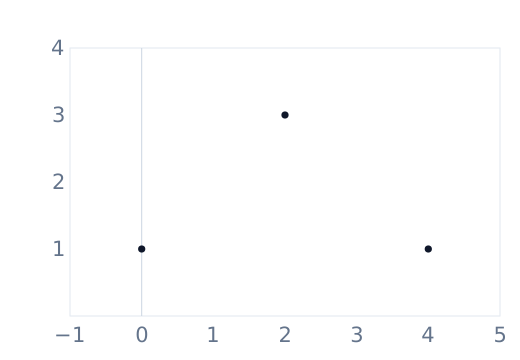
Answer: D. x2 + y2 − 4x − 2y + 1 = 0
The worked solution is part of the full bank. The question and the correct letter are free. Unlock the full bank
Free · correct letter only
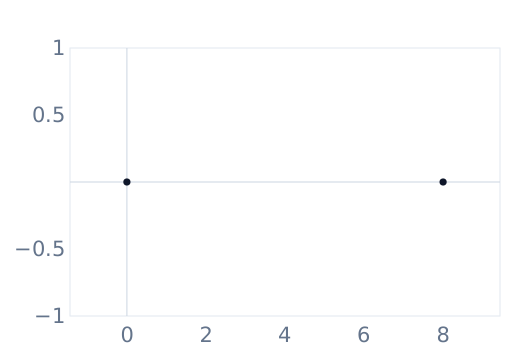
Answer: A. (x + 1)2 + y2 = 9
The worked solution is part of the full bank. The question and the correct letter are free. Unlock the full bank
Free · correct letter only
Answer: C. 2
The worked solution is part of the full bank. The question and the correct letter are free. Unlock the full bank
Free · correct letter only
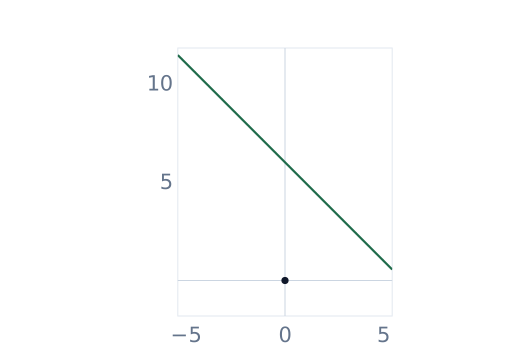
Answer: C. 3
The worked solution is part of the full bank. The question and the correct letter are free. Unlock the full bank
Free · correct letter only
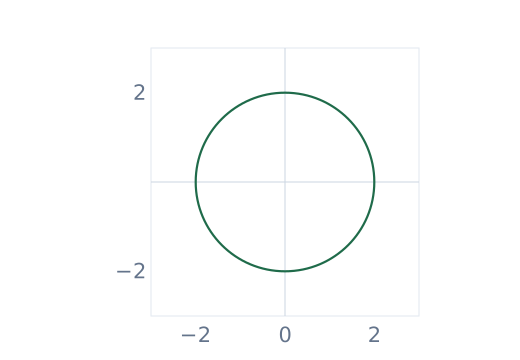
Answer: C. 2
The worked solution is part of the full bank. The question and the correct letter are free. Unlock the full bank
Free · correct letter only
Answer: C. 9 − 4√2
The worked solution is part of the full bank. The question and the correct letter are free. Unlock the full bank
Free · correct letter only
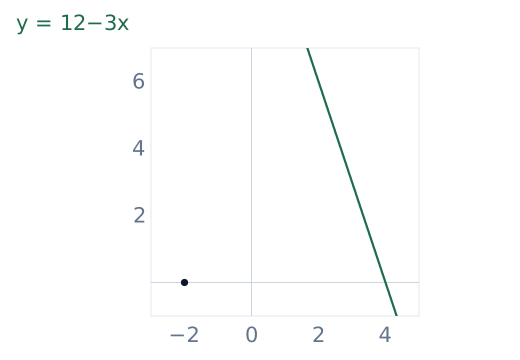
Answer: A. 27/5
The worked solution is part of the full bank. The question and the correct letter are free. Unlock the full bank
Free · correct letter only
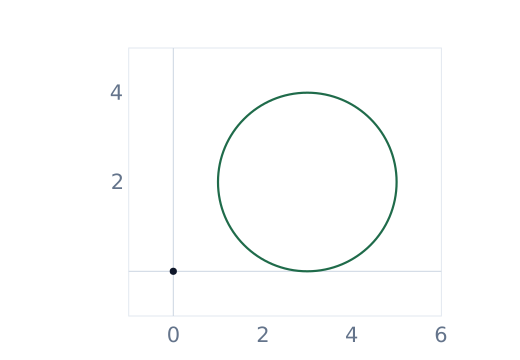
Answer: E. 12/5
The worked solution is part of the full bank. The question and the correct letter are free. Unlock the full bank
Free · correct letter only
Answer: D. 10 − 3√2
The worked solution is part of the full bank. The question and the correct letter are free. Unlock the full bank
Free · correct letter only
Answer: C. 12
The worked solution is part of the full bank. The question and the correct letter are free. Unlock the full bank
Free · correct letter only
Answer: B. 3√17 / 17
The worked solution is part of the full bank. The question and the correct letter are free. Unlock the full bank
Free · correct letter only
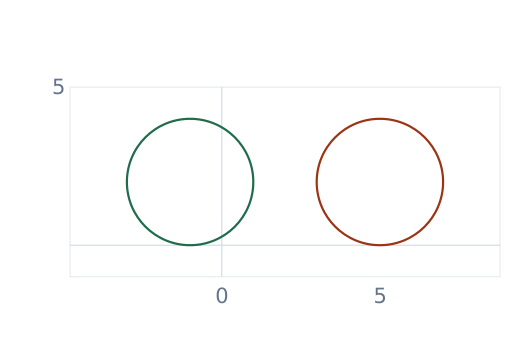
Answer: E. 2√5/5
The worked solution is part of the full bank. The question and the correct letter are free. Unlock the full bank
Free · correct letter only
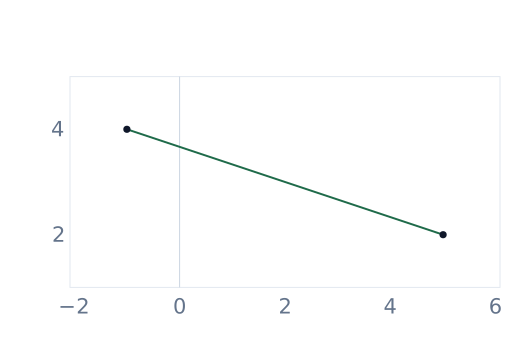
Answer: E. 3x − y = 3
The worked solution is part of the full bank. The question and the correct letter are free. Unlock the full bank
Free · correct letter only
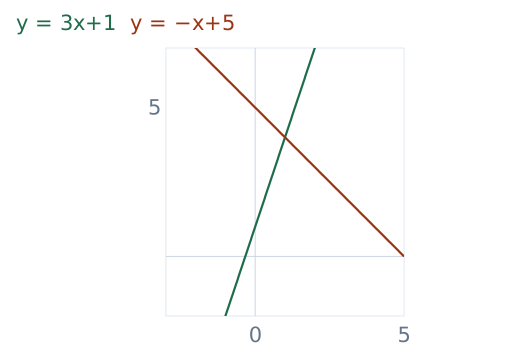
Answer: B. −6
The worked solution is part of the full bank. The question and the correct letter are free. Unlock the full bank
Free · correct letter only
Answer: A. y = −x2 + 2x − 2
The worked solution is part of the full bank. The question and the correct letter are free. Unlock the full bank
Free · correct letter only
Answer: D. 4π
The worked solution is part of the full bank. The question and the correct letter are free. Unlock the full bank
Free · correct letter only
Answer: B. a < 0 or a > 3
The worked solution is part of the full bank. The question and the correct letter are free. Unlock the full bank
Free · correct letter only
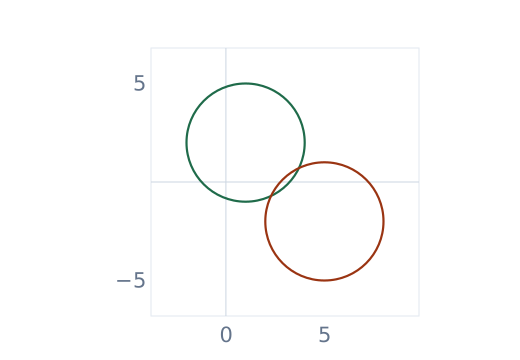
Answer: C. 6 + 4√2
The worked solution is part of the full bank. The question and the correct letter are free. Unlock the full bank
Free · correct letter only
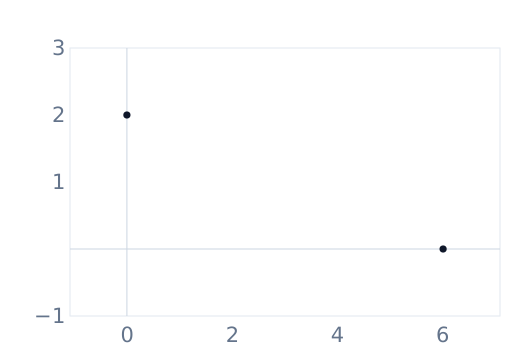
Answer: E. 10
The worked solution is part of the full bank. The question and the correct letter are free. Unlock the full bank
Free · correct letter only
Answer: A. 20
The worked solution is part of the full bank. The question and the correct letter are free. Unlock the full bank
Free · correct letter only
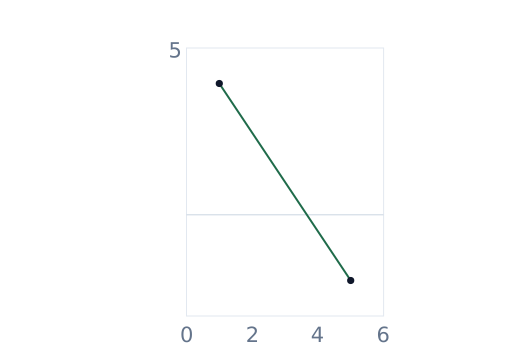
Answer: A. 3/2
The worked solution is part of the full bank. The question and the correct letter are free. Unlock the full bank
Free · worked solution included
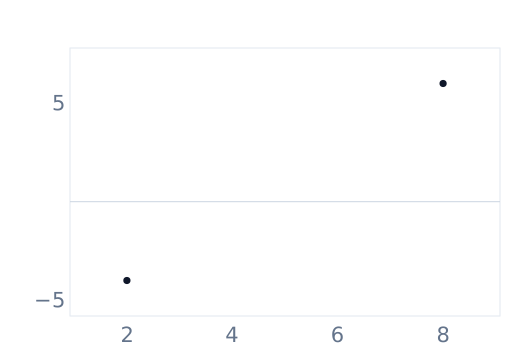
Answer: A. (5, 1)
Worked solution. The midpoint is ((2 + 8) / 2, (−4 + 6) / 2) = (10 / 2, 2 / 2) = (5, 1).
Why the other options look right. B averages the absolute values of the y-coordinates, (4 + 6) / 2 = 5, and drops the sign of −4. C uses the difference 8 − 2 as the x-coordinate. D halves the differences instead of the sums: ((8 − 2) / 2, (6 − (−4)) / 2) = (3, 5). E adds the coordinates and does not divide by 2.
Free · correct letter only
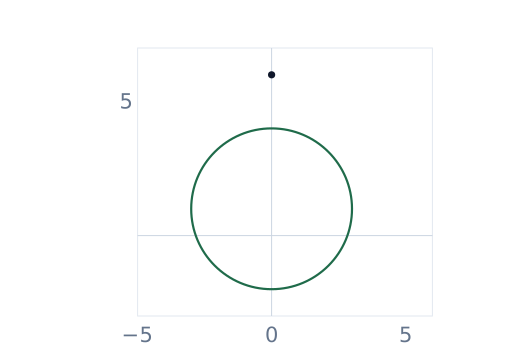
Answer: C. 9/2
The worked solution is part of the full bank. The question and the correct letter are free. Unlock the full bank
Free · correct letter only
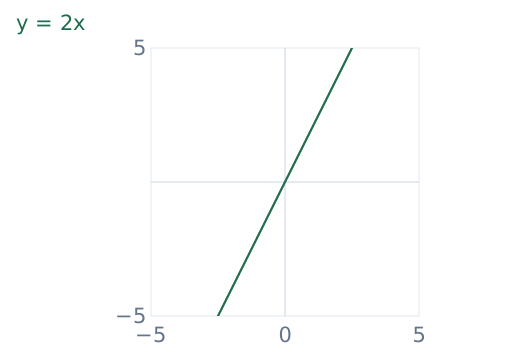
Answer: D. (−2a/5, 11a/5)
The worked solution is part of the full bank. The question and the correct letter are free. Unlock the full bank
Free · correct letter only
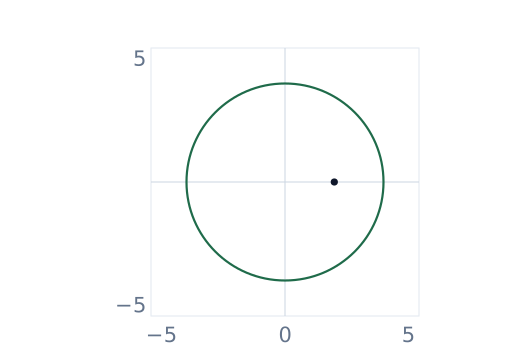
Answer: B. x2 + y2 − 2x = 0
The worked solution is part of the full bank. The question and the correct letter are free. Unlock the full bank
Free · correct letter only
Answer: E. (6, 10)
The worked solution is part of the full bank. The question and the correct letter are free. Unlock the full bank
Free · correct letter only
Answer: C. (2, 6)
The worked solution is part of the full bank. The question and the correct letter are free. Unlock the full bank
Free · correct letter only
Answer: B. (3, −6)
The worked solution is part of the full bank. The question and the correct letter are free. Unlock the full bank
Free · correct letter only
Answer: C. (7, 18)
The worked solution is part of the full bank. The question and the correct letter are free. Unlock the full bank
Free · correct letter only
Answer: B. (8, 6)
The worked solution is part of the full bank. The question and the correct letter are free. Unlock the full bank
Free · correct letter only
Answer: D. (6, 9)
The worked solution is part of the full bank. The question and the correct letter are free. Unlock the full bank
Free · correct letter only
Answer: D. (1, 11)
The worked solution is part of the full bank. The question and the correct letter are free. Unlock the full bank
Free · correct letter only
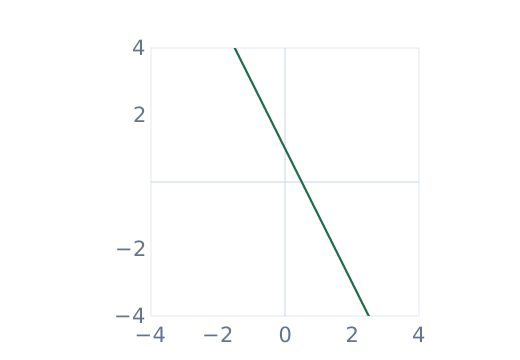
Answer: A. −1/2
The worked solution is part of the full bank. The question and the correct letter are free. Unlock the full bank
Free · correct letter only
Answer: C. 3√5
The worked solution is part of the full bank. The question and the correct letter are free. Unlock the full bank
Free · correct letter only
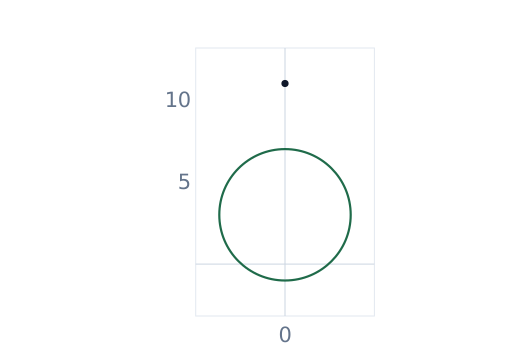
Answer: E. 11√3 / 3
The worked solution is part of the full bank. The question and the correct letter are free. Unlock the full bank
Free · correct letter only
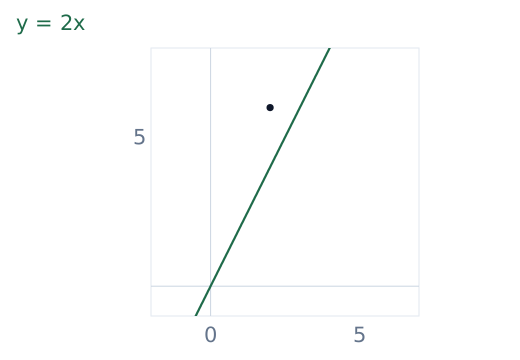
Answer: D. (18/5, 26/5)
The worked solution is part of the full bank. The question and the correct letter are free. Unlock the full bank
Free · correct letter only
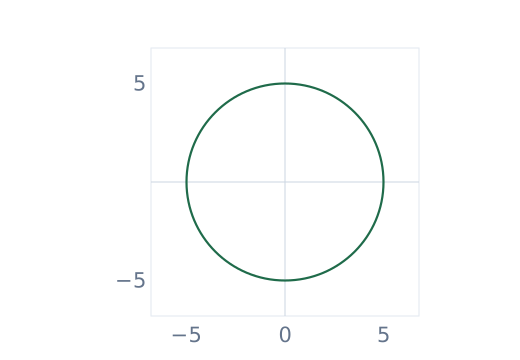
Answer: B. y = −x/3
The worked solution is part of the full bank. The question and the correct letter are free. Unlock the full bank
Free · correct letter only
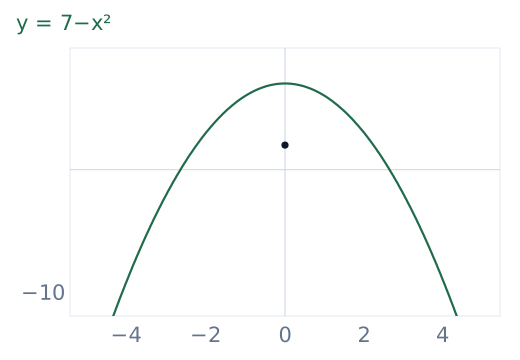
Answer: B. (3√2)/2
The worked solution is part of the full bank. The question and the correct letter are free. Unlock the full bank
Free · correct letter only
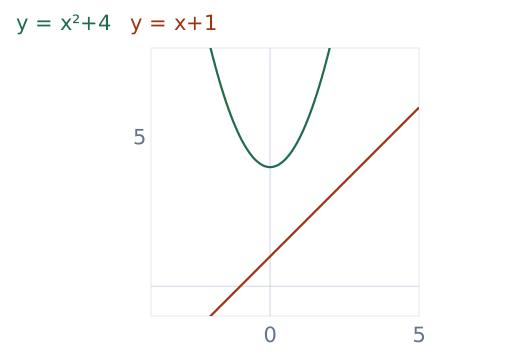
Answer: C. (11√2)/8
The worked solution is part of the full bank. The question and the correct letter are free. Unlock the full bank
Free · correct letter only
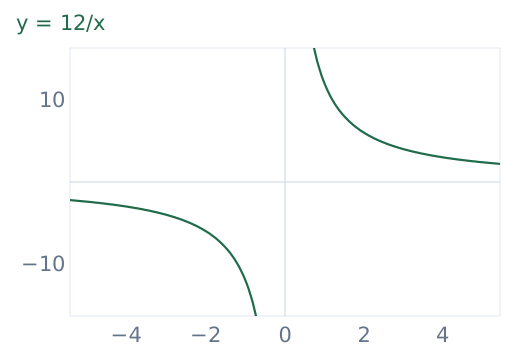
Answer: B. (16√10)/3
The worked solution is part of the full bank. The question and the correct letter are free. Unlock the full bank
Free · correct letter only
Answer: D. 31
The worked solution is part of the full bank. The question and the correct letter are free. Unlock the full bank
Free · correct letter only
Answer: A. (4, 6)
The worked solution is part of the full bank. The question and the correct letter are free. Unlock the full bank
Free · correct letter only
Answer: E. 2√5
The worked solution is part of the full bank. The question and the correct letter are free. Unlock the full bank
Free · correct letter only
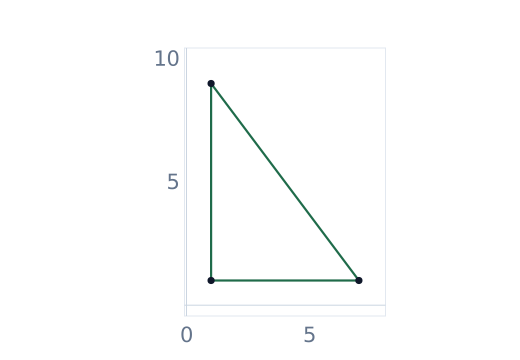
Answer: C. 21π
The worked solution is part of the full bank. The question and the correct letter are free. Unlock the full bank
Free · correct letter only
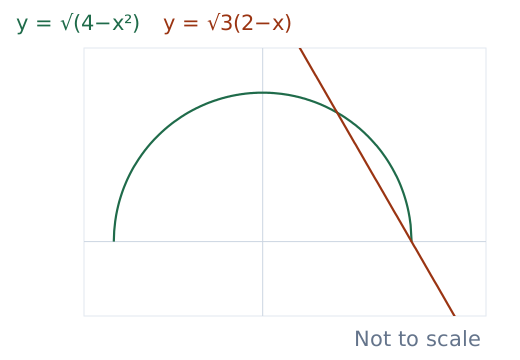
Answer: C. 2π/3 − √3
The worked solution is part of the full bank. The question and the correct letter are free. Unlock the full bank
Free · correct letter only
Answer: E. −7 − 5√2
The worked solution is part of the full bank. The question and the correct letter are free. Unlock the full bank
Free · correct letter only
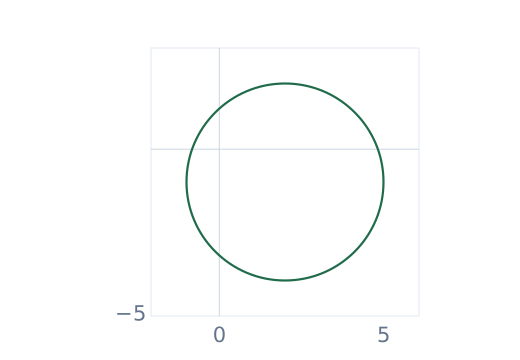
Answer: C. 17
The worked solution is part of the full bank. The question and the correct letter are free. Unlock the full bank
Free · correct letter only
Answer: B. 31
The worked solution is part of the full bank. The question and the correct letter are free. Unlock the full bank
Free · correct letter only
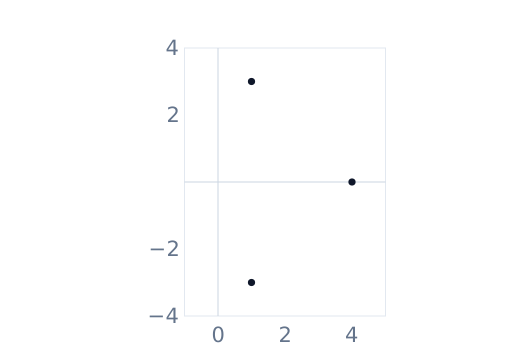
Answer: B. 2
The worked solution is part of the full bank. The question and the correct letter are free. Unlock the full bank
Free · correct letter only
Answer: D. √(2r² + 2)
The worked solution is part of the full bank. The question and the correct letter are free. Unlock the full bank
Paper 2 is Mathematical Reasoning. It can test this same topic. Argument, proof, and identifying errors are the topics that appear on Paper 2 only.
Free · correct letter only
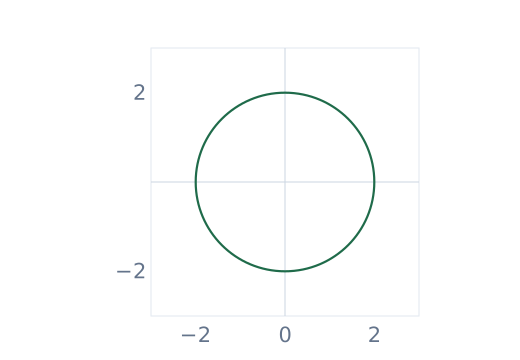
Answer: A. 20 or −28
The worked solution is part of the full bank. The question and the correct letter are free. Unlock the full bank
Free · correct letter only
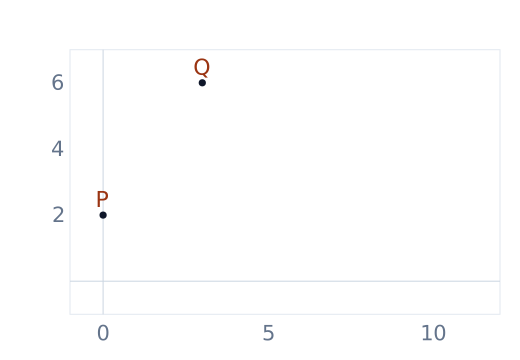
Answer: D. 50
The worked solution is part of the full bank. The question and the correct letter are free. Unlock the full bank
Free · correct letter only
Answer: C. (7, 8)
The worked solution is part of the full bank. The question and the correct letter are free. Unlock the full bank
Free · correct letter only
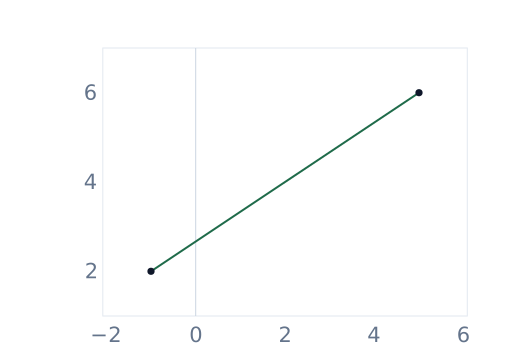
Answer: D. y = −(3/2)x + 7
The worked solution is part of the full bank. The question and the correct letter are free. Unlock the full bank
Free · correct letter only
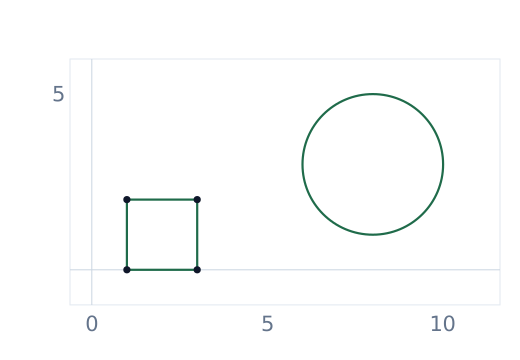
Answer: C. −1
The worked solution is part of the full bank. The question and the correct letter are free. Unlock the full bank
Free · correct letter only
Answer: A. (a + b)2 = 8c
The worked solution is part of the full bank. The question and the correct letter are free. Unlock the full bank
Free · correct letter only
Answer: B. the value of c only
The worked solution is part of the full bank. The question and the correct letter are free. Unlock the full bank
Free · correct letter only
Answer: E. (48 + 25√3)/13
The worked solution is part of the full bank. The question and the correct letter are free. Unlock the full bank
Free · correct letter only
Answer: C. If two of the lines are perpendicular, then the third is parallel to y = 8x.
The worked solution is part of the full bank. The question and the correct letter are free. Unlock the full bank
Free · correct letter only
Answer: B. √(13/2)
The worked solution is part of the full bank. The question and the correct letter are free. Unlock the full bank
Free · correct letter only
Answer: D. 2 + √5
The worked solution is part of the full bank. The question and the correct letter are free. Unlock the full bank
Free · correct letter only
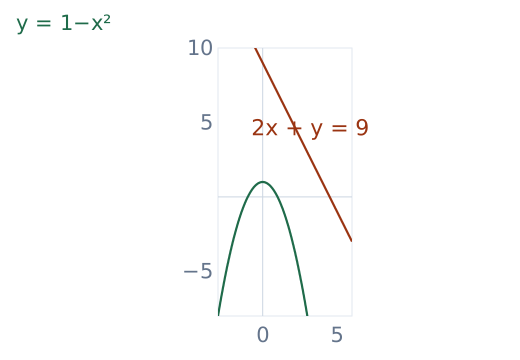
Answer: E. (7√5)/5
The worked solution is part of the full bank. The question and the correct letter are free. Unlock the full bank
Free · correct letter only
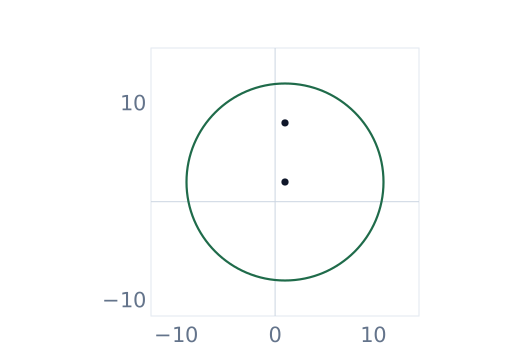
Answer: C. r = 4 or r = 16
The worked solution is part of the full bank. The question and the correct letter are free. Unlock the full bank
Free · correct letter only
Answer: E. √17/17
The worked solution is part of the full bank. The question and the correct letter are free. Unlock the full bank
Free · correct letter only
Answer: C. −2x + 3y = 12
The worked solution is part of the full bank. The question and the correct letter are free. Unlock the full bank
Free · correct letter only
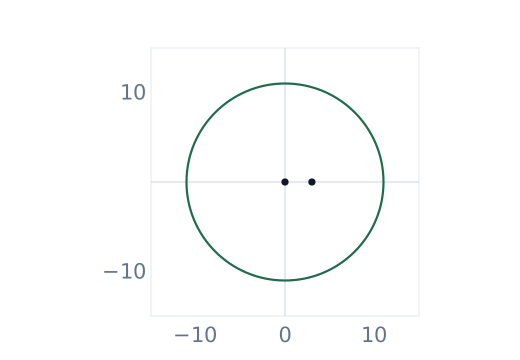
Answer: A. r = 8 or r = 14
The worked solution is part of the full bank. The question and the correct letter are free. Unlock the full bank
Free · correct letter only
Answer: D. √2/2
The worked solution is part of the full bank. The question and the correct letter are free. Unlock the full bank
Free · correct letter only
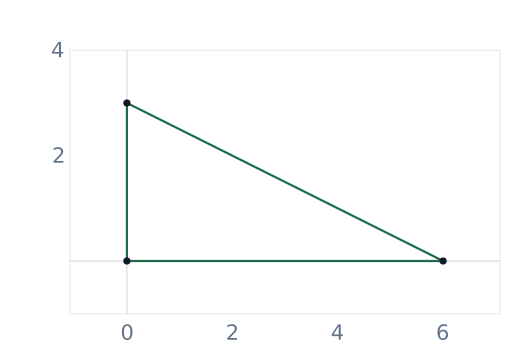
Answer: E. 6√5/5
The worked solution is part of the full bank. The question and the correct letter are free. Unlock the full bank
Free · correct letter only
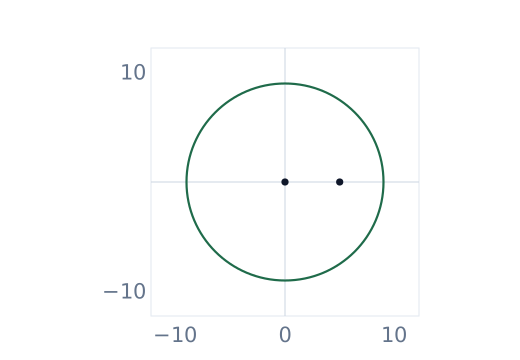
Answer: E. r = 4 or r = 14
The worked solution is part of the full bank. The question and the correct letter are free. Unlock the full bank
Free · correct letter only
Answer: B. (4√5)/5
The worked solution is part of the full bank. The question and the correct letter are free. Unlock the full bank
Free · correct letter only
Answer: B. 18√13/13
The worked solution is part of the full bank. The question and the correct letter are free. Unlock the full bank
Free · correct letter only
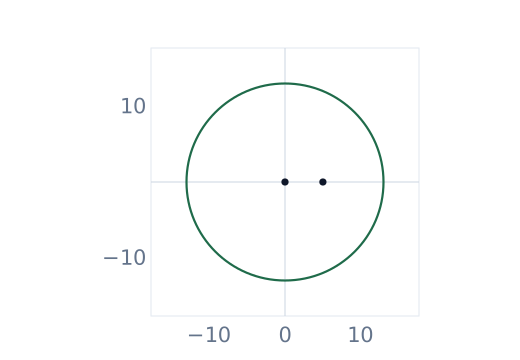
Answer: E. k = 8 or k = 18
The worked solution is part of the full bank. The question and the correct letter are free. Unlock the full bank
Free · correct letter only
Answer: E. 168/25
The worked solution is part of the full bank. The question and the correct letter are free. Unlock the full bank
Free · correct letter only
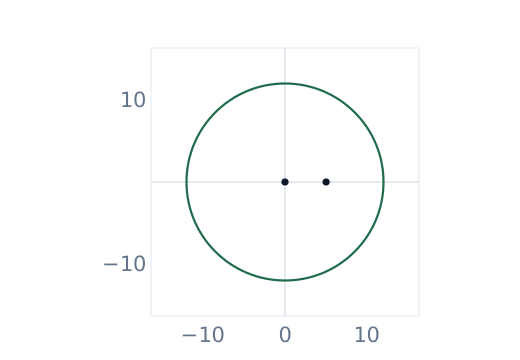
Answer: A. r = 7 or r = 17
The worked solution is part of the full bank. The question and the correct letter are free. Unlock the full bank
Free · correct letter only
Answer: E. (7√2)/8
The worked solution is part of the full bank. The question and the correct letter are free. Unlock the full bank
Free · correct letter only
Answer: E. 28√65/65
The worked solution is part of the full bank. The question and the correct letter are free. Unlock the full bank
Free · correct letter only
Answer: D. 8
The worked solution is part of the full bank. The question and the correct letter are free. Unlock the full bank
Free · correct letter only
Answer: D. 3√2/8
The worked solution is part of the full bank. The question and the correct letter are free. Unlock the full bank
Free · correct letter only
Answer: D. 420/29
The worked solution is part of the full bank. The question and the correct letter are free. Unlock the full bank
Free · correct letter only
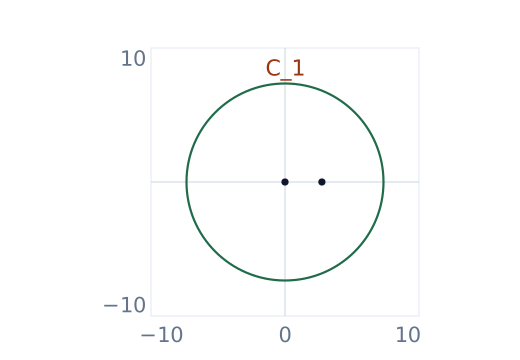
Answer: E. r = 5 or r = 11
The worked solution is part of the full bank. The question and the correct letter are free. Unlock the full bank
Free · correct letter only
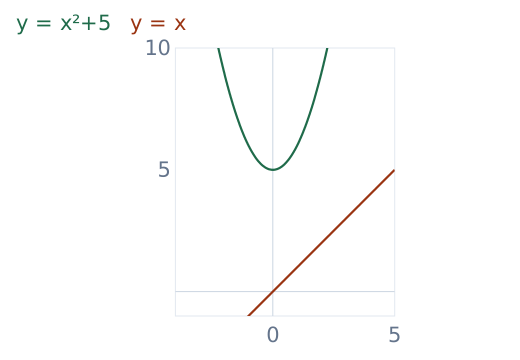
Answer: B. 19 √2 / 8
The worked solution is part of the full bank. The question and the correct letter are free. Unlock the full bank
Free · correct letter only
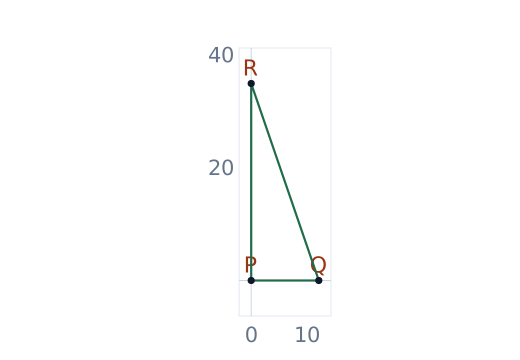
Answer: B. 420/37
The worked solution is part of the full bank. The question and the correct letter are free. Unlock the full bank
Free · correct letter only
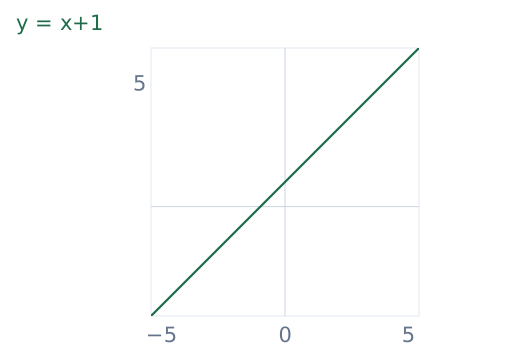
Answer: D. k ≤ 1 − 2√3 or k ≥ 1 + 2√3
The worked solution is part of the full bank. The question and the correct letter are free. Unlock the full bank
Free · correct letter only
Answer: E. 9 < k < 16
The worked solution is part of the full bank. The question and the correct letter are free. Unlock the full bank
Free · correct letter only
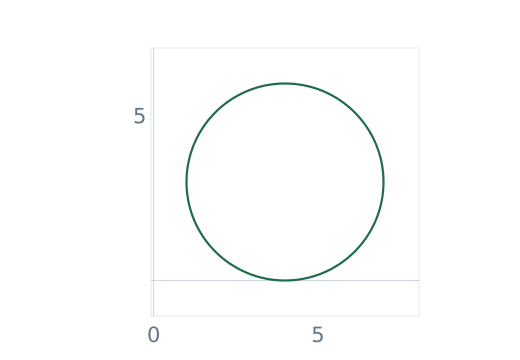
Answer: B. 2
The worked solution is part of the full bank. The question and the correct letter are free. Unlock the full bank
Free · correct letter only
Answer: C. (3, 5)
The worked solution is part of the full bank. The question and the correct letter are free. Unlock the full bank
Free · correct letter only
Answer: E. 24/5
The worked solution is part of the full bank. The question and the correct letter are free. Unlock the full bank
Free · correct letter only
Answer: B. 2√5 / 5
The worked solution is part of the full bank. The question and the correct letter are free. Unlock the full bank
Free · correct letter only
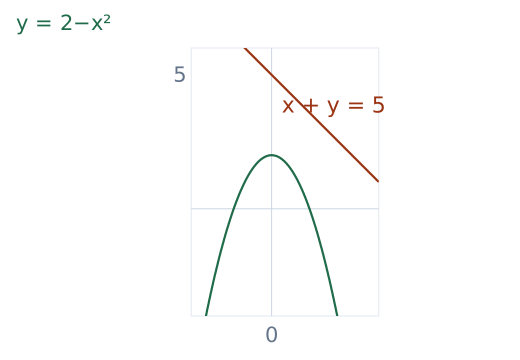
Answer: A. 11√2 / 8
The worked solution is part of the full bank. The question and the correct letter are free. Unlock the full bank